
Many collectors rely on first impressions. A bright coin seems valuable. An old coin feels rare. A toned coin looks unique. A high mintage suggests low value. Most of these conclusions come from guesswork, not from observation. A basic check through coin identification solves only one part of the puzzle. The market behaves differently from assumptions, and data often contradict popular beliefs.
Here, we would like to review the myths that influence buying, selling, and grading decisions. Stay with us to know why the myth exists, how collectors react to it, and what real auction numbers, population data, and surface behavior show instead.
Myth 1: “Old Coins Are Always Rare”
Age does not define rarity. The market proves this daily. Millions of 19th-century world coins exist in worn condition. Many early U.S. copper pieces survive in large numbers. Meanwhile, modern coins with short production cycles can be extremely difficult to find.
Why the myth persists: People link age to scarcity. The logic seems natural: the older the coin, the fewer remain. But coins circulate, get stored, sit in jars, and reappear in estate lots. Survival patterns rarely follow age alone.
What the data shows: A common 1880s European bronze coin may sell for less than a modern low-mintage commemorative. Survival rates for many Victorian issues are extremely high. By contrast, certain modern pieces (especially conditional rarities or limited-issue coins) reach high premiums even though they are far younger.
So, age is only a starting point. Rarity depends on survival numbers, demand, grade distribution, and the presence of strong collectors who support the series.

Myth 2: “High Mintage Means Low Value”
Mintage figures do not equal market value. A large production run does not guarantee that enough high-grade pieces survive. Many coins with high mintages become scarce in upper grades.
Why the myth persists: Collectors read mintage numbers early in their hobby. The assumption forms quickly: more coins minted should mean a lower value.
What the data shows: Some series carry millions of struck coins but almost no Gem survivors. Poor storage, heavy circulation, and metal softness reduce the number of high-end coins. Conditional rarity pushes values far above what the mintage alone suggests.
Examples:
- Common-date Morgan Dollars in MS67;
- Jefferson Nickels with weak strikes;
- Washington Quarters from the 1970s in true Gem grades.
These coins are plentiful in worn shape but scarce in top condition.
So, remember to check grade populations instead of relying on mintage lists. Value forms in the upper end of the grading curve.
Myth 3: “Shiny Means Valuable”
Brightness is often mistaken for quality. Many beginners equate shine with preservation. In reality, excessive brightness usually signals cleaning, dipping, or surface alteration.
Why the myth persists: A bright coin stands out in a group. Under casual light, it looks sharper than a naturally toned piece. Sellers sometimes rely on this effect.
What the data shows: Original luster moves in a structured cartwheel pattern. Altered surfaces show flat shine or scattered reflection. Cleaning removes metal and does not restore surface flow lines. Auction prices confirm that original, even toned surfaces outperform unnaturally bright pieces in every series.
Finally, always judge the surface, not the shine. Natural luster supports value. Flat reflection destroys it.
Myth 4: “Toning Always Raises Value”
Toning can help or hurt. Some coins tone attractively in stable environments. Others develop color because of corrosion, heat, chemical treatment, or poor storage.
Why the myth persists: Toned coins look different, and difference is often mistaken for rarity. Online photos exaggerate colors and create unrealistic expectations.
What the data shows: Album toning and natural patina behave predictably. Chemical toning, PVC staining, and moisture streaks weaken the surface. The market rewards stability, not intensity of color. Many aggressively colored coins sell for less than untoned examples.
Thus, tone is meaningful only when it supports original texture and remains stable.
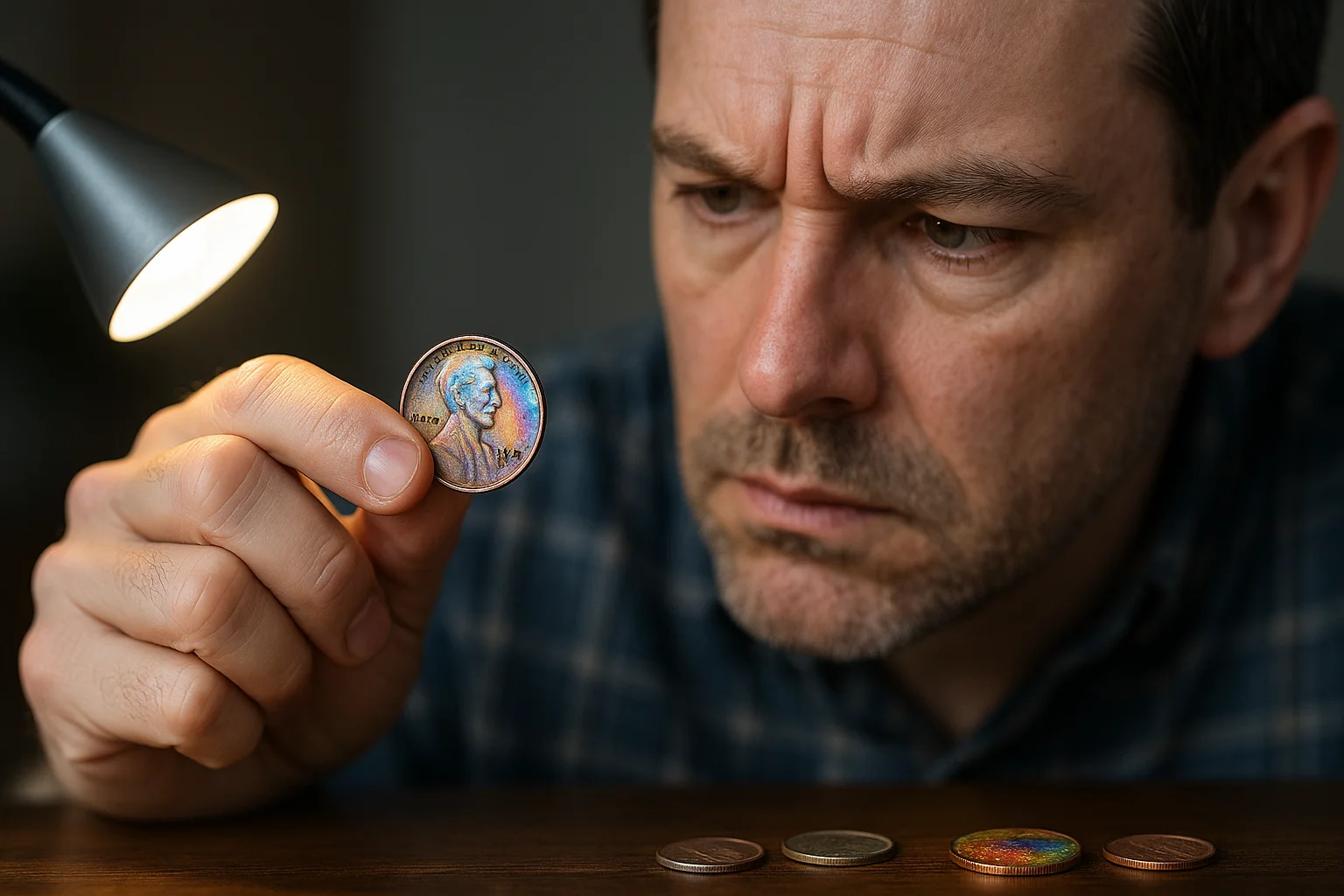
Myth 5: “Damage Doesn’t Matter If the Coin Is Rare”
Rarity does not compensate for structural flaws. Even scarce dates lose value when the surface is unstable.
Why the myth persists: Collectors believe that rarity alone drives demand and assume buyers will overlook flaws.
What the data shows: Damage reduces confidence across all grades. Even key dates drop sharply when the surface is compromised. Common issues that trigger reductions:
- Rim dents that distort the outline;
- Scratches or gouges in open fields;
- Cleaning that removes the original texture;
- Corrosion or PVC residue;
- Altered or uneven color.
Auction data confirms this pattern repeatedly. Buyers avoid problem coins because future stability becomes uncertain.
Rarity has value only when the surface remains intact. Damage removes premium potential, even in scarce series.
Myth 6: “Most Valuable Coins Are Easy to Spot”
Many valuable coins hide in plain sight. Subtle traits like strike quality, surface originality, and variety markers define value far more than appearance.
Why the myth persists: Beginners expect rare coins to look unusual or brighter than common ones.
What the data shows: High-value coins often depend on details that are easy to miss. Main indicators collectors rely on:
- Strong, uninterrupted luster;
- Sharp strike on hair, feathers, or shield lines;
- Original tone that follows the metal;
- Clean fields without hidden marks;
- Presence of a known variety marker.
These traits rarely stand out unless you know what to examine.
So, train your eye to read surfaces and varieties. Valuable coins rarely announce themselves.
Myth 7: “Varieties and Errors Are Random Finds”
Many collectors assume varieties and errors appear occasionally and unpredictably. In reality, most major varieties follow patterns within specific series and specific die stages.
Why the myth persists: Bulk searching produces accidental discoveries. The experience reinforces the idea that variety hunting is random.
What the data shows: Doubled dies, repunched mint marks, transitional compositions, design shifts, and hub changes follow predictable timelines. Once you know the series, you know where to look.
Tip: A coin scanner app helps maintain consistent photos for side-by-side checks and records the basic attributes. Fine markers still require manual comparison under angled light, since only the surface reveals true variety details.
Thus, variety hunting becomes systematic once you understand the behavior of each series. Patterns replace randomness.
Myth 8: “Market Value Follows Age or Story, Not Data”
Collectors often assign emotional weight to coins. A piece with an interesting story or antique look feels more valuable. The market responds to measurable factors instead.
Why the myth persists: Stories are memorable. Data seems dry. New collectors rely on intuition when they do not have reference points.
What the data shows: Auction results follow surface quality, grade distribution, demand inside the series, eye appeal, and availability. Personal narratives do not influence bidding. Scarcity does, but only when supported by stable condition and measurable demand.
So, value forms from predictable inputs, not from sentiment. Data-driven evaluation protects your budget.
Where Assumptions Come From — and Why They Persist
Numismatic myths form because the hobby mixes emotion, appearance, and history. A coin looks old, so it must be rare. A shiny piece looks impressive, so it must be valuable. A bright tone looks unique, so it must be desirable. These shortcuts save time, but they also create mistakes.
The market rewards slow observation. Coins behave consistently when viewed through surface integrity, grade distribution, and demand patterns. Myths disappear once collectors compare assumptions with real population numbers and completed sales.
How to Replace Myths With Practical Evaluation
A structured routine removes uncertainty:
- Confirm identity through basic references.
- Study surfaces under soft, even light.
- Check the date and mint distribution.
- Review grade populations.
- Evaluate tone for stability.
- Compare with recent auction results.
- Review demand inside the series.
- Separate stable coins from unstable ones.
Each of these steps narrows risk. And while the process, remember to use the Coin ID Scanner app to store your collection digitally and verify the official data of newly found pieces. Scans help track changes and prevent confusion between similar issues, and notes stay linked to each record for later comparison.
Digital tools support manual evaluation but do not replace it.
Data Clears the Path Forward
Numismatics grows stronger when assumptions give way to observation. Myths fall apart once surface quality, grade pressure, tone behavior, and demand become the focus. A stable routine produces better buying decisions, stronger collections, and fewer mistakes. Coins stop being mysteries and become measurable objects with predictable signals.
Understanding what the data shows — and what the myths distort — keeps the hobby steady. Collectors who rely on clear evidence and a good free coin identifier app navigate the market with confidence and avoid the traps that myths create.