
Rarity represents a nuanced concept often understood incorrectly.
Knowing the market 1907 Nickel value requires reliance on verified data sets.
Scarcity emerges exclusively when transitioning to categories exceeding MS65.
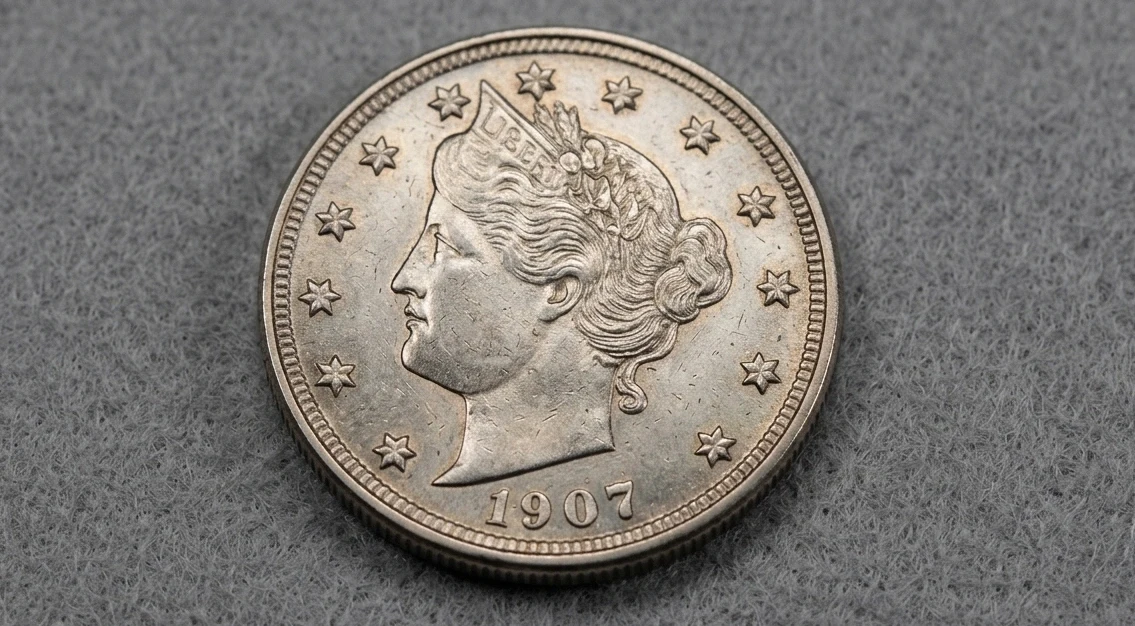
| Parameter | Value |
| Mass | 5.00 g |
| Diameter | 21.20 mm |
| Metal Composition | 75% Copper, 25% Nickel |
| Thickness | 1.95 mm |
| Edge Type | Plain |
Exceeding the mass tolerance of 0.19 g classifies an object as a mint error.
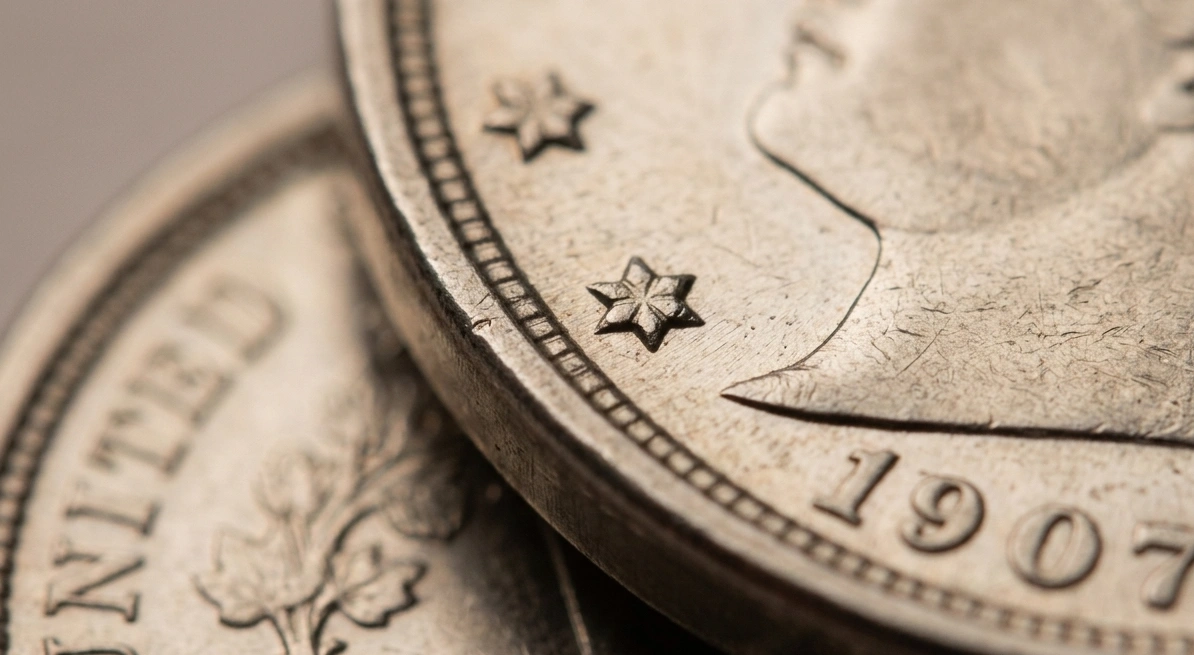
Careful inspection of the rim reveals the precision of 1907 striking equipment.
Grading Hierarchy and Price Distribution
Value correlates directly with professional assessment using the Sheldon scale.
Relief wear reduces liquidity on global auction platforms.
Very Good 8 Condition → $2
Fine 12 Condition → $5
Very Fine 20 Condition → $10
Extremely Fine 40 Condition → $25
About Uncirculated 50 Condition → $55
Entering Mint State categories fundamentally shifts the pricing trajectory.
Coins lacking circulation marks demonstrate different capital growth patterns.
MS60 → $95
MS63 → $165
MS65 → $450
MS66 → $1,150
MS67 → $12,500
Specimens maintaining peak preservation levels appear rarely in modern trade.
Auction Record Dynamics
Public sales record genuine investor demand throughout 2024 and 2025.
Record sums involve coins displaying exceptional luster.
2024 data: an MS67+ specimen sold for $28,400.
2025 records: a verified transaction reached $31,200 for the same grade.
Price growth in the elite segment reached 9.8% over twelve months.
Investment appeal stays high provided professional certification exists.
Factors Influencing Market Liquidity
Direct dependencies exist between visual traits and final hammer prices.
Eliminating mechanical damage on the Liberty portrait increases value by 15%.
Original mint frost remains a critical factor for MS categories.
Metal aging processes occur slower compared to silver-based alloys.
Dark spots or surface rot reduce valuations by 40% regardless of rarity.
Uniform golden toning increases participant interest during bidding rounds.
Annual Price Fluctuation Statistics
Analyzing data from 2020 through early 2026 reveals consistent trends.
Average annual value increases based on preservation grade appear below.
- Grades up to VF20: +1.2% annually
- Grades EF40 to AU58: +3.5% annually
- Grades MS60 to MS64: +6.1% annually
- Grades MS65 and above: +8.4% annually
Market stability persists lacking major macroeconomic disruptions.
Demand for 1907 nickels grows from efforts completing Liberty Head sets.
Professional Certification Impacts
Authoritative agency slabs guarantee item authenticity for buyers.
Purchasers prefer coins having passed expert verification.
Certification provides transaction transparency.
Evaluation service costs start at $25 per individual unit.
Price gaps between certified and raw coins reach 30%.
Verifying serial numbers in online databases eliminates forgery risks.
Comparison with Alternative Mintage Years
Understanding context requires comparing 1907 figures with similar outputs.
1907 does not represent the rarest date within this specific series.
| Year | Mintage (millions) | MS63 Price |
| 1906 | 38.6 | $155 |
| 1907 | 38.4 | $165 |
| 1908 | 22.6 | $210 |
| 1912-S | 0.2 | $3,800 |
Relative availability makes the 1907 issue popular among entry-level numismatists.
Mass production limits explosive price potential in mid-range grades.
Manufacturing Defects and Varieties
Interest in 1907 coins intensifies when searching for rare die pairs.
Documented cases of double strikes exist in historical records.
Finding reverse wreath damage increases prices by 150%.
Off-center strikes exceeding 5% occur quite infrequently.
Such specimens sell via individual collector requests.
Die cracks appearing frequently during this era do not count as errors.
Authenticity Verification Methodology
Studying physical properties prevents significant financial losses.
Applying precision scales helps identify cast copies.
Primary verification steps:
- Weighing with 0.01 g accuracy
- Measuring diameter using micrometers
- Inspecting edges for seam marks
- Checking the details with the coin identifier
Magnet usage yields no results given the non-magnetic alloy properties.
Technical analysis confirms compliance with 1883 legislative standards.
Market Risks and Ownership Strategies
Acquiring low-grade coins does not qualify as an investment.
Accumulating common specimens leads to capital stagnation.
Buying one MS66 coin remains more effective than buying one hundred VG8 units.
Storage and insurance expenses must influence profit calculations.
Holding periods for achieving noticeable returns last at least five years.
Selling through major auction houses requires paying 15% commissions.
Geographic Origin and Preservation
Most surviving 1907 coins originate from old bank hoards.
Ground burial causes irreversible surface changes.
Weight loss due to harsh environments reaches 0.15 g.
Market standards classify such items as damaged.
Selling these objects requires a 60% discount from catalog prices.
Cleaning coins with abrasive tools destroys numismatic value entirely.
Inflationary Pressures on Valuation
Precious metals do not exist within this coin composition.
Price formation relies solely on collectible demand.
2025 inflation placed pressure on basic asset classes.
Numismatic markets responded with a moderate 4.2% price rise, regularly checking the best coin identifier app free.
1907 nickels preserve owner purchasing power.
This asset remains stable over long-term cycles.